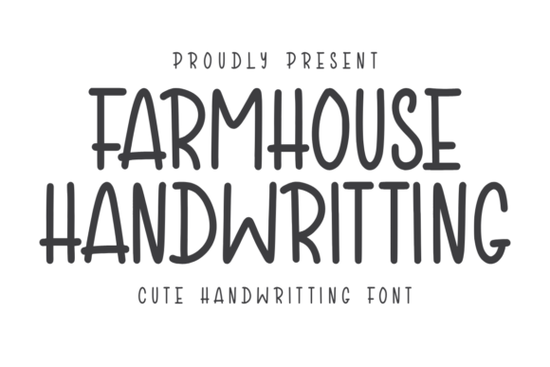
If you're looking for a friendly, relaxed handwriting font that feels handmade not digital Farmhouse Handwriting Font is a thoughtful choice. It’s not overly ornate or fussy; instead, it balances casual charm with clean readability. That makes it especially useful for planners, printable stickers, greeting cards, quote graphics, and Cricut-ready craft projects. Creative moms, small-batch stationery sellers, and print-on-demand designers often reach for this one when they want warmth without sacrificing clarity.
What kind of projects does Farmhouse Handwriting work well for?
This font shines where authenticity and approachability matter most. Think: weekly planner headers, hand-lettered recipe cards, baby shower invitations, farmhouse-style wall art, or even custom vinyl decals for mason jars and wooden signs. Its slightly uneven baseline and gentle stroke variation mimic real pen-on-paper motion so it reads as human-made, not AI-generated. That subtle imperfection is exactly why it pairs so well with natural textures like kraft paper, linen backgrounds, or watercolor overlays.
It’s also practical: the full family includes both uppercase and lowercase letters, numerals, punctuation, and common accents no need to hunt for alternate glyphs mid-design. And because it’s a TrueType and OpenType font, it loads smoothly in Canva, Silhouette Studio, Cricut Design Space, and Adobe apps.
How does it compare to other popular script fonts?
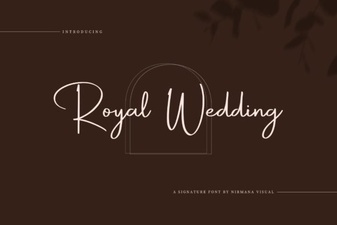
Farmhouse Handwriting sits comfortably between playful and polished more relaxed than Alexia Bright Font, which has tighter spacing and bolder contrast, and less formal than Royal Wedding Font, which leans into elegant calligraphy. If you’ve used Authentic Society Font, you’ll notice Farmhouse Handwriting has a gentler rhythm and softer entry/exit strokes ideal for everyday use rather than high-contrast branding.
For signature-style accents or short phrases (like “hand-poured” on candle labels), Perfect Signature Font offers more flair but Farmhouse Handwriting holds up better in longer blocks of text, like journal prompts or workshop handouts.
Who actually uses this font and why?
We hear from real users: small business owners printing seasonal sticker sheets for Etsy, homeschooling parents designing weekly checklists, and church volunteers making bulletin inserts. One customer told us she uses it across her entire brand from Instagram story templates to printable Bible journaling pages because it feels consistent and personal. Another mentioned how well it scales: it stays legible at 12 pt for planner headers but still looks charming at 60 pt on a tote bag mockup.
It’s also beginner-friendly. Unlike some script fonts that require ligature toggling or manual kerning adjustments, Farmhouse Handwriting works out of the box. No extra setup needed just install, type, and go.
Where to use it and where to pause
This isn’t the best pick for ultra-minimalist logos or technical documentation. Its personality is part of its strength, but that means it’s not neutral. If your brand voice is sleek, corporate, or highly modern, consider pairing it with a clean sans-serif (like Montserrat or Inter) for balance using Farmhouse Handwriting only for headlines, quotes, or decorative elements.
Also worth noting: while it’s great for digital and print, avoid using it at very small sizes (<10 pt) in dense paragraphs. Stick to headings, short labels, or single-line phrases for optimal legibility.
Getting started practical next steps
Once you download Farmhouse Handwriting Font, try these three low-effort ways to test it:
- Create a simple “Good Morning” planner header in your favorite design tool use light gray text on cream background for instant farmhouse vibes.
- Design a set of six printable quote cards (e.g., “Breathe,” “Grow,” “Rest”) print one on cardstock and hold it up beside a photo of your workspace. Does it feel like you?
- Import it into Cricut Design Space, type your child’s name, and run a quick test cut on scrap vinyl. Check how cleanly the curves cut especially the lowercase “g” and “y.”
If those feel right, you’ll likely reach for it again and again not as a novelty, but as a reliable tool in your creative toolkit.
Get Started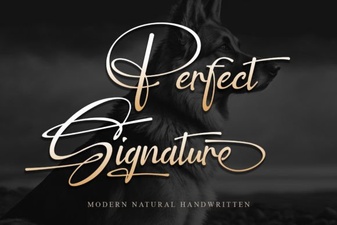 Craft a Signature Font for Your Unique Style
 Royal Wedding Font Ideas for Your Design Projects
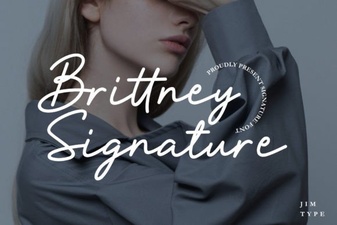 Design with the Brittney Signature Font Family
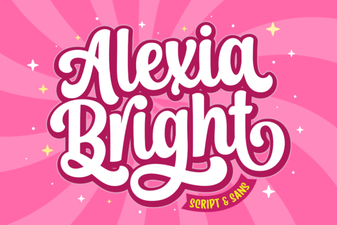 Discover the Alexia Bright Typographic Creative Toolkit
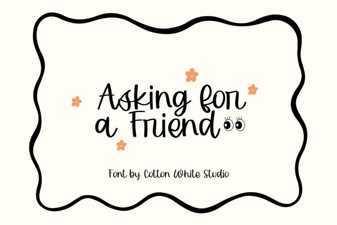 The Asking for a Friend Font for Web Projects
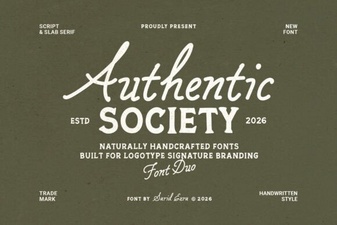 Authentic Society Font for Modern Design Projects